Choosing a new clothes dryer is a significant decision for any household, impacting not only your daily routine but also your utility bills for years to come. With advancements in technology, both gas and electric dryers offer efficient solutions for tackling laundry, yet they come with distinct differences in upfront costs, installation requirements, and long-term operating expenses. Understanding these nuances is key to selecting the option that best fits your needs, budget, and home setup.
Understanding Common Dryer Types
Dryers primarily differ in their heat source. While both types use electricity to power the drum, lights, and controls, their main heating mechanisms diverge.
- Vented Electric Dryers: These are perhaps the most common. They use electric heating coils to warm the air, which is then circulated through the drum to dry clothes. Moist, hot air is expelled outside through a vent.
- Ventless Electric Dryers (Condenser or Heat Pump): These innovative electric models do not require external venting. Condenser dryers cool the moist air to condense water, which is collected in a reservoir or drained. Heat pump dryers, a more energy-efficient sub-type of ventless, reheat and recirculate the air, drastically reducing energy consumption.
- Gas Dryers (Natural Gas or Propane): Gas dryers utilize natural gas or propane to generate heat through a burner. This method typically allows for faster and hotter drying cycles. Similar to vented electric models, they also require an external vent to expel combustion gases and moist air.
Each type offers unique advantages, but the core distinction lies in their energy source and the implications for both initial outlay and ongoing expenses.
How to Choose the Right Clothes Dryer for Your Home
Selecting the ideal clothes dryer involves weighing several factors beyond just the purchase price. A holistic approach considers your home’s infrastructure, your laundry habits, and your long-term financial goals.
Begin by assessing your household needs. Do you have a large family with frequent, heavy laundry loads, or is your household smaller with occasional drying needs? The volume and frequency of your laundry will influence the required capacity and the importance of faster drying times.
Next, consider your utility rates and energy costs in your specific region. Natural gas prices and electricity rates fluctuate significantly by location and provider. What might be cheaper to operate in one state could be more expensive in another. Researching local energy costs is a crucial step in projecting long-term operational expenses.
Understanding installation requirements and costs is paramount. Does your laundry room already have a 240-volt electrical outlet and an external vent? Is there an existing gas line available, or would one need to be installed? The presence or absence of these connections will dramatically affect your initial installation budget.
Finally, evaluate features that enhance convenience and efficiency, such as sensor drying (which automatically stops the cycle when clothes are dry), steam cycles for wrinkle release, or smart connectivity for remote control. Researching reputable brands and models known for durability and performance can also guide your decision, alongside your overall budget considerations for both the appliance and its installation.
Detailed Cost Comparison: Gas vs. Electric Dryers
When comparing gas and electric dryers, the cost analysis extends beyond the sticker price, encompassing installation, operation, and maintenance over the appliance’s lifespan.
Initial Purchase Price
|
Our Picks for the Best Clothes dryer in 2026
As an Amazon Associate I earn from qualifying purchases.
|
||
| Num | Product | Action |
|---|---|---|
| 1 | Portable Clothes Dryer, 900W Fast Drying & Large Load Capacity for Laundry and Shoes - Compact Mini Dryer Machine for Travel, Apartments, RV, Dorm Blue |

|
| 2 | Drying Rack Clothing, 3-Tier Clothes Drying Rack Foldable, Antirust Laundry Drying Rack Collapsible Use for Indoor & Outdoor, 11.8" D x 34.6" W x 35.4" H, White |
|
| 3 | Amazon Basics Foldable Portable Clothes Drying Rack for Indoor Air Drying, Collapsible Design, 14.5" D x 29.5" W x 41.8" H, White |
|
| 4 | Euhomy Dryer, 3.5 Cu. Ft. 1500W Clothes Dryer, Stainless Steel Tumble Dryer with Exhaust Hose for Home, Apartment, Dorm, White |
|
| 5 | GE PROFILE 7.2 cu. ft. Vented Electric Dryer in White with Auto Dry and Extended Tumble |
|
| 6 | Kenmore 7.0 cu. ft. Front Load Electric Dryer - with Guard to Reduce Wrinkles & Static - Smart Sensor Drying - LED - White |
|
| 7 | Sakugi Clothes Drying Rack, Foldable 2-Level Laundry Drying Rack with Height-Adjustable Wings, for Clothing & Bedding, Free-Standing Space-Saving Rack, Indoor & Outdoor, 55.5" L × 22.8" W, Gray |
|
| 8 | HOMIDEC Clothes Drying Rack, Oversized 4-Tier(67.7" High) Foldable Stainless Steel Drying Rack Clothing, Movable Drying Rack with 4 castors, 24 Drying Poles and 14 Hooks for Bed Linen, Clothing, Grey |
|
| 9 | MOJOCO Portable Clothes Dryer - Mini/Compact Dryer for Apartment, RV, Travel - Small Quiet Fast-Drying Machine with Adjustable Timer & Hassle-Free Setup |
|
| 10 | BLACK+DECKER BCED37 Compact Dryer for Standard Wall Outlet, Small, 4 Modes, Load Volume 13.2 lbs., White |
|
Generally, gas dryers tend to have a higher upfront cost. You might find a new gas dryer to be about $50 to $100 more expensive than a comparable electric model. Some sources suggest gas dryers can be 15-20% pricier. This difference is often attributed to the more complex internal components required for gas combustion. However, for top-of-the-line models, the price difference between gas and electric can become negligible.
Installation Costs
This is where the most significant initial cost discrepancies often emerge.
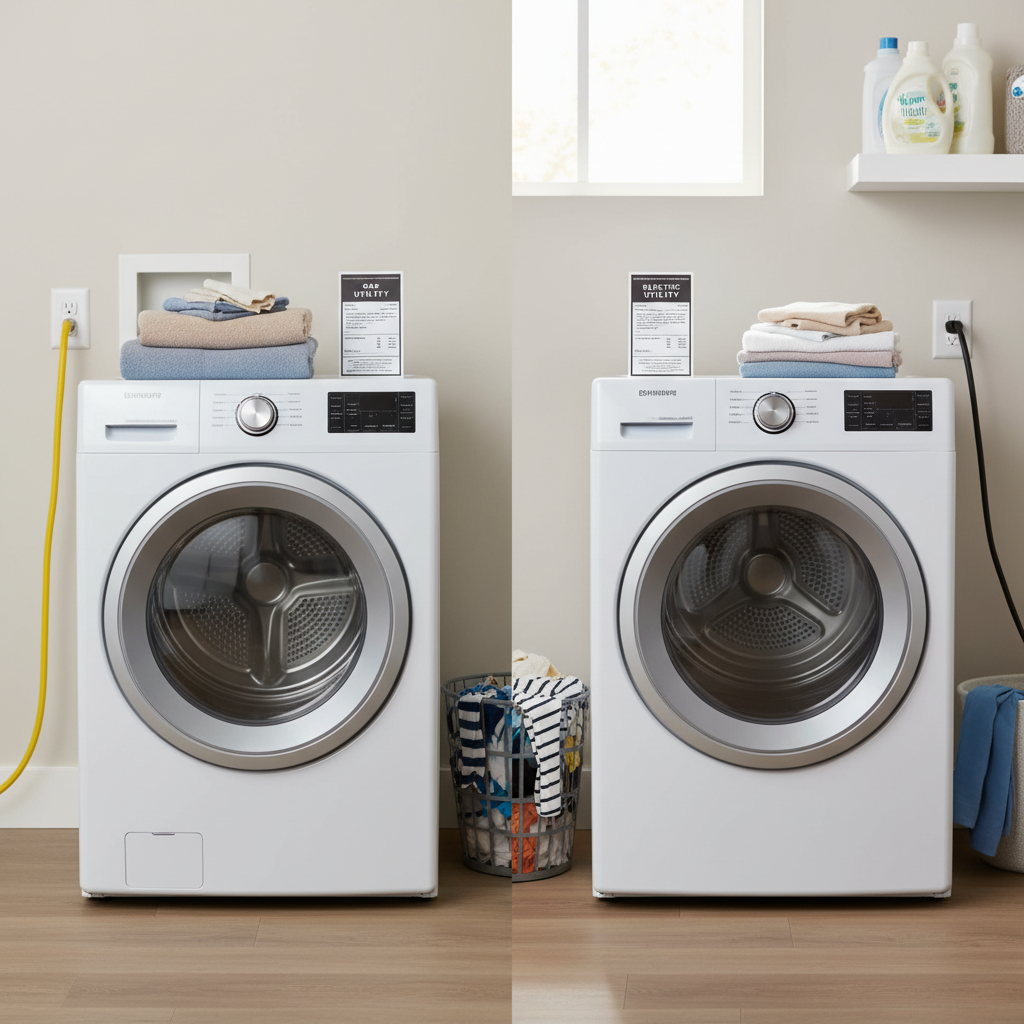
- Electric Dryers: Installation is typically simpler and more affordable. If your laundry area already has a dedicated 240-volt electrical outlet (common in many homes), installation is often a straightforward plug-and-play process, with some retailers even offering free setup. If an upgrade to a 240V outlet is needed, you might incur electrician costs.
- Gas Dryers: These require a natural gas line (or propane hookup) and a standard 120-volt outlet for the controls, along with an external vent. If your home lacks an existing gas line in the laundry room, installing one can be a substantial expense, ranging from $400 to $1,000, plus an additional $125 to $250 for professional hookup. This professional intervention is essential for safety reasons, making gas dryer installation generally more involved and costly upfront.
Operating Costs (Per Load/Annually)
In most regions, natural gas is less expensive per therm than electricity is per kilowatt-hour, leading to lower operating costs for gas dryers. Gas dryers also heat up faster and dry clothes more quickly, contributing to their efficiency per cycle.
- Gas Dryers: Typically cost around $0.15 to $0.25 per load to operate. Annually, this can translate to approximately $85 for an energy-efficient model.
- Electric Dryers: Generally cost more per load, often in the range of $0.30 to $0.40. Annual operating costs for an energy-efficient electric model might be around $120 to $130.
This difference often means gas dryers can save you $40 to $60 annually in energy bills, or roughly one-third the cost per load compared to a standard electric model. These savings, however, are heavily dependent on local utility rates and your drying habits.
Long-term Savings and ROI
Despite the higher initial purchase and installation costs, the lower operating expenses of a gas dryer can lead to long-term savings. Some analyses suggest that the energy savings from a gas dryer can offset its higher upfront cost in as little as eight months of consistent use. Over the typical 10-13 year lifespan of a dryer, these savings can add up considerably.
Maintenance and Repair Costs
Electric dryers often feature simpler mechanisms, which can lead to easier and potentially less costly maintenance and repairs. Gas dryers, with their gas lines and combustion components, may require more specialized maintenance, including regular checks for gas leaks, to ensure safe operation.
Energy Efficiency
Gas dryers generally heat up faster and achieve higher temperatures, leading to quicker drying times and, in many cases, greater energy efficiency per cycle. However, newer electric dryers, particularly heat pump models, have made significant strides in energy efficiency by recycling warm air, sometimes cutting energy use by up to 50% compared to conventional electric dryers.
“While the initial sticker shock of a gas dryer might make you pause, the consistent savings on your energy bills often make it the more economical choice in the long run, especially if your home is already plumbed for natural gas.” – Eleanor Vance, Appliance Efficiency Analyst
Top Dryer Models: A Comparative Overview
While specific model recommendations depend on individual needs and rapidly evolving market offerings, understanding the types available helps narrow your choices. Modern dryers, regardless of their fuel source, come packed with features designed for convenience and efficiency.
- Standard Vented Dryers: Both gas and electric models offer a wide range of capacities and basic to advanced drying cycles, including delicate, heavy duty, and wrinkle care. Many include moisture sensors to prevent over-drying.
- Heat Pump Electric Dryers: These are leading the charge in energy efficiency among electric models. They offer significant energy savings, although they typically have a higher purchase price and longer drying times compared to conventional vented dryers. They are ideal for homes without external venting options or for environmentally conscious consumers.
- Smart Dryers: Many contemporary models, both gas and electric, integrate smart technology, allowing you to control and monitor your laundry from a smartphone app, receive cycle completion alerts, and even download specialized drying programs.
When selecting, prioritize features like multiple temperature settings, diverse drying cycles, and energy-saving modes. Always check the Energy Star rating, which indicates models that meet strict energy efficiency guidelines.
Tips for Using and Maintaining Your Dryer
Proper use and regular maintenance are crucial for both extending the lifespan of your dryer and maximizing its energy efficiency, regardless of whether it’s gas or electric.
- Load Appropriately: Avoid overloading your dryer, as this can hinder airflow and lead to longer drying times and increased energy consumption. Conversely, drying very small loads can also be inefficient.
- Clean the Lint Filter: Make it a habit to clean the lint filter before or after every load. A clogged lint filter restricts airflow, reducing efficiency and posing a fire hazard.
- Inspect and Clean Vents: For vented dryers, periodically check the external vent for obstructions and clean the vent duct at least once a year. Blocked vents significantly decrease efficiency and can be dangerous.
- Professional Maintenance: For gas dryers, consider an annual professional check-up to ensure the gas lines are secure and the combustion system is operating safely and efficiently. Electric dryers generally require less specialized maintenance.
- Troubleshooting Common Issues: If you notice unusually long drying times, check the lint filter, vent hose for kinks, and ensure the load size is appropriate.
By following these simple guidelines, you can ensure your dryer operates at its best, saving you money and preventing potential problems.
Maximizing Energy Savings with Your Clothes Dryer
Beyond choosing an efficient model, several practices can help reduce your dryer’s energy consumption.
- Optimal Cycle Selection: Use the lowest heat setting that is appropriate for your fabrics. High heat uses more energy and can damage clothes. Sensor dry settings are ideal as they prevent over-drying.
- Spin Clothes Thoroughly: Before moving clothes to the dryer, ensure your washing machine’s spin cycle extracts as much water as possible. The less water in your clothes, the less time and energy your dryer needs.
- Dry Similar Fabrics Together: This allows for more even drying, as items with similar drying needs can complete their cycle at the same time.
- Utilize Off-Peak Hours: If your utility company offers time-of-use rates, running your dryer during off-peak hours can significantly lower your electricity costs.
- Consider Air Drying: On warm, sunny days, take advantage of natural sunlight and fresh air to dry certain items. This is the ultimate energy-saving method.
Where to Purchase Your Next Dryer
When you’re ready to invest in a new dryer, you have several reliable options for purchasing.
- Major Appliance Retailers: Large stores often have a wide selection of brands and models, competitive pricing, and frequently offer installation and hauling services for old appliances.
- Online Marketplaces: Many retailers have robust online platforms, providing the convenience of shopping from home and access to customer reviews and detailed product specifications. However, confirm delivery, installation, and return policies.
- Local Appliance Dealers: These smaller, specialized stores can offer personalized service, expert advice, and sometimes more flexible delivery schedules.
Regardless of where you buy, always inquire about warranties, return policies, and crucially, professional installation services, especially if you opt for a gas dryer or are upgrading your electrical setup. Ensuring safe and correct installation is paramount.
Conclusion
The debate between gas and electric dryers boils down to a balance of initial investment versus long-term operational costs, alongside your home’s existing infrastructure. Electric dryers typically boast a lower upfront cost and simpler installation, making them an accessible choice for many. However, gas dryers, with their faster drying times and often lower per-load energy costs, can prove to be the more economical option over their lifespan, particularly if a gas line is already available.
Ultimately, the “cheaper” dryer isn’t just about the price tag, but about the total cost of ownership tailored to your specific situation. Consider your local energy rates, the cost of installation, your household’s laundry volume, and your priorities for efficiency and convenience. By carefully evaluating these factors, you can make an informed decision that will keep your clothes fresh and your budget happy.
What factors will you prioritize when choosing your next dryer?
Frequently Asked Questions
Are gas dryers safer than electric?
Both gas and electric dryers are safe when properly installed and maintained. Gas dryers require proper venting to expel carbon monoxide, necessitating professional installation and regular checks to prevent leaks. Electric dryers pose less risk of gas-related issues but still require correct electrical wiring and vent maintenance to prevent fire hazards from lint buildup.
Do gas dryers need a special outlet?
Gas dryers typically require a standard 120-volt electrical outlet to power the drum, lights, and controls, in addition to a dedicated natural gas line. They do not need the specialized 240-volt outlet that electric dryers demand for their heating elements.
How much does it cost to convert from electric to gas dryer?
Converting from an electric dryer to a gas dryer can be a significant investment, primarily due to the cost of installing a new gas line if one doesn’t exist. This can range from $400 to $1,000 for the gas line itself, plus additional costs for professional dryer hookup and potentially new venting, making the total easily over $500.
Are heat pump dryers worth it?
Heat pump dryers, a type of ventless electric dryer, are generally more expensive to purchase but offer substantial long-term energy savings—often using 50% less energy than conventional electric models. They are particularly worth it for those in apartments or homes without external venting, or for anyone prioritizing significant energy efficiency and a lower environmental footprint over upfront cost and potentially longer drying times.