Stepping into the world of home appliances, particularly when dealing with laundry room essentials like clothes dryers, can sometimes feel like navigating a complex electrical maze. You’ve likely encountered terms like “3-prong” and “4-prong” cords, especially if you’re setting up a new dryer or moving into a different home. This seemingly small detail is actually crucial for both appliance functionality and, more importantly, household safety. Understanding the fundamental differences between these two types of dryer cords isn’t just about making sure your dryer plugs in; it’s about ensuring your appliance operates efficiently and safely, in line with modern electrical standards. This article will demystify the distinctions, explore the safety implications, and guide you through managing compatibility issues, helping you make an informed choice for your home.
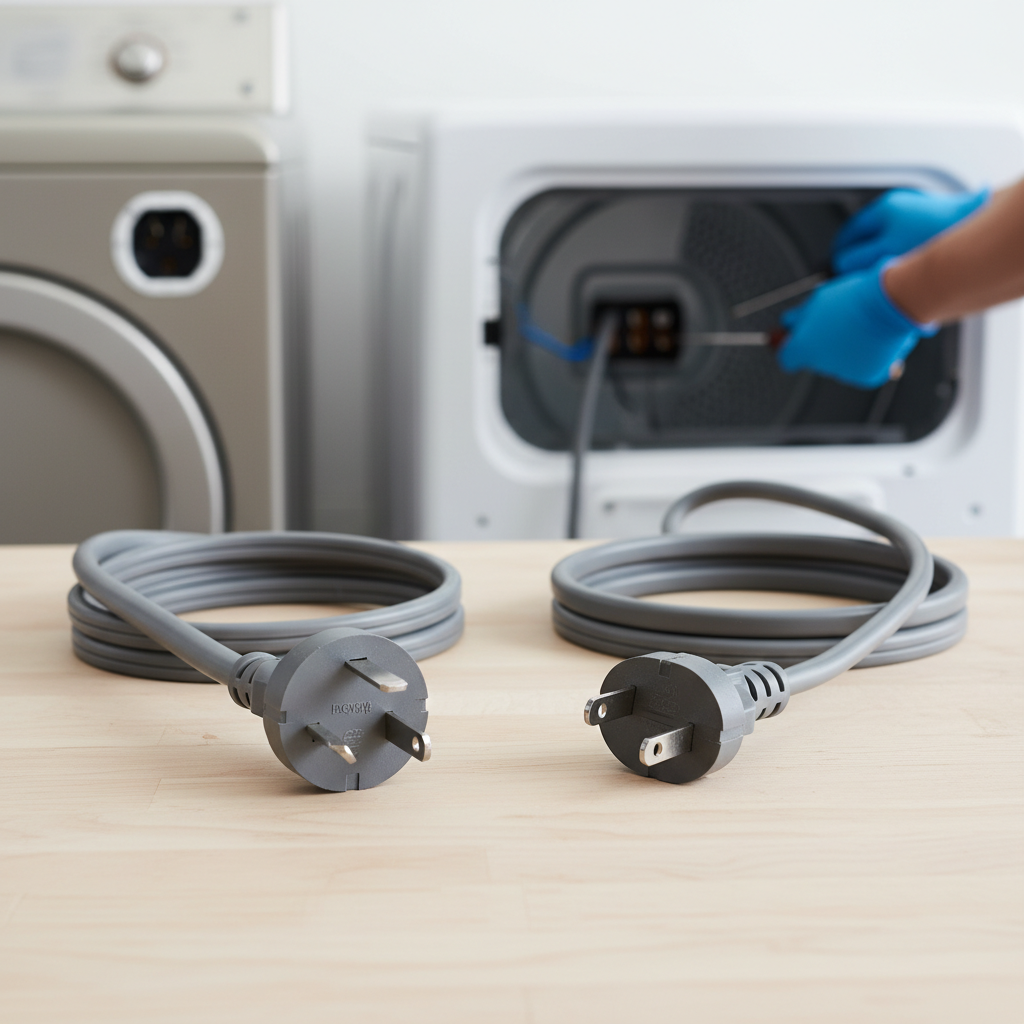
Understanding Dryer Cords: The Basics
Electric clothes dryers are powerful appliances, requiring a significant amount of electricity to generate the heat necessary for drying your laundry. Unlike smaller household devices that run on standard 120-volt outlets, electric dryers typically operate on a 240-volt circuit. This higher voltage demands specialized electrical connections, which is where 3-prong and 4-prong cords come into play. While both are designed to deliver the necessary power, their internal wiring and safety features differ significantly, reflecting evolving electrical codes and a heightened focus on user protection.
3-Prong Dryer Cords: A Look at the Past
For many decades, the 3-prong dryer cord was the standard for electric dryers in homes across North America. This cord type features three wires: two “hot” wires (typically black and red), which carry the 240-volt electrical current, and a third wire (usually white) that serves a dual purpose as both the neutral and the ground conductor. In this older configuration, the neutral wire is bonded directly to the dryer’s metal chassis, meaning it provides both the return path for unused power and the grounding function.
Historically, this setup was considered adequate, but it presents a significant safety concern. If there’s an electrical fault within the dryer—such as a short circuit—and the shared neutral/ground wire becomes compromised, the dryer’s metal frame could become energized. This creates a serious risk of electric shock for anyone who touches the appliance. Many homes built before 1996 will still have these 3-prong outlets, and while it’s permissible to continue using them with compatible dryers, understanding the inherent risks is vital.
4-Prong Dryer Cords: The Modern Standard
In response to the safety limitations of 3-prong systems, the National Electrical Code (NEC) mandated a change in 1996, making the 4-prong dryer cord the new standard for all new constructions and when replacing existing dryer circuits. The 4-prong cord significantly enhances safety by separating the grounding path from the neutral path.
This modern cord includes four wires: two hot wires (black and red) for the 240-volt power, a dedicated neutral wire (white) to carry unused current back to the electrical panel, and a completely separate ground wire (green or bare copper). This dedicated ground wire is connected directly to the dryer’s metal casing and provides an independent, safe route for any fault current to travel back to the electrical panel and trip the circuit breaker. This separation drastically reduces the risk of the appliance’s metal frame becoming energized, offering a superior level of protection against electrical shock and potential fire hazards.
Key Differences at a Glance
Understanding the core distinctions between these two dryer cord types is crucial for ensuring safety and compliance. Here’s a comparative look at their primary characteristics:
| Feature | 3-Prong Dryer Cord | 4-Prong Dryer Cord |
|---|---|---|
| Number of Wires | 3 (2 hot, 1 shared neutral/ground) | 4 (2 hot, 1 neutral, 1 dedicated ground) |
| Grounding System | Grounding provided through the neutral wire | Dedicated ground wire for safety |
| Safety Level | Lower; risk of shock if neutral/ground fails | Higher; significantly reduced risk of shock and fire |
| Typical Era | Pre-1996 electrical codes | Post-1996 electrical codes (current standard) |
| NEC Compliance | Permissible for existing installations (grandfathered) | Required for new installations and circuit replacements |
The key takeaway from this comparison is the enhanced safety provided by the dedicated ground wire in 4-prong systems. This design choice by the NEC was a direct response to preventing serious electrical accidents.
Why the Change? The Evolution of Electrical Safety Standards
The shift from 3-prong to 4-prong dryer cords was a pivotal moment in residential electrical safety. The National Electrical Code (NEC), which sets the standards for electrical installations in the United States, recognized the inherent dangers of combining the neutral and ground functions into a single wire. This was particularly critical for high-power appliances like electric dryers, where even a minor fault could lead to severe consequences.
The 1996 NEC update mandated the separate ground wire, ensuring that if a fault occurs, the dangerous current has an isolated path to safely dissipate, tripping the breaker without energizing the appliance itself. This change reflects a broader commitment to preventing electrical accidents, making modern homes significantly safer. While older 3-prong installations remain “grandfathered” (meaning they are still permitted if existing and undamaged), the preference and recommendation for new installations are always for the safer 4-prong system.
“The evolution of electrical codes, particularly the move to 4-prong dryer cords, underscores our continuous effort to enhance safety in every corner of the home. It’s a testament to prioritizing human well-being over convenience.” – David Johnson, Master Electrician
Matching Your Dryer Cord to Your Outlet
One of the most common dilemmas homeowners face is when their new dryer comes with a 4-prong cord, but their home has an older 3-prong outlet, or vice versa. New electric dryers are typically sold without a power cord because homes can have either a 3-prong or a 4-prong receptacle. It’s the homeowner’s responsibility to purchase and install the correct cord type.
If your dryer cord doesn’t match your wall outlet, you have a few options. The safest and most recommended solution is to have a qualified electrician install a 4-prong outlet if your home currently has a 3-prong one, especially if you’re undertaking other electrical updates. This ensures your electrical system meets current safety codes. Alternatively, the power cord on most electric dryers can be replaced to match the existing outlet. However, this is a task that requires careful attention to detail and should only be attempted by someone comfortable with electrical wiring, or preferably, a professional. Using adapters is generally considered a temporary or last-resort measure and is not recommended for long-term use, as they do not provide the same level of dedicated grounding safety as a proper 4-prong setup.
Converting Dryer Cords: When and How
Converting a dryer cord typically involves replacing the existing cord on the appliance itself to match the wall outlet. For instance, if you have a new dryer with a 4-prong cord and an older 3-prong outlet, you might need to install a 3-prong cord onto the dryer. Conversely, if you have an older dryer and a modern 4-prong outlet, you would replace the 3-prong cord with a 4-prong one.
This process involves accessing the terminal block at the back of the dryer, disconnecting the old cord, and wiring the new one according to the manufacturer’s instructions, ensuring correct wire connections (hot, neutral, and ground). It’s crucial to understand that while it might seem straightforward, improper wiring can lead to severe electrical hazards, including shock and fire. Always unplug the appliance from the power source or turn off the circuit breaker before beginning any electrical work. If you have any doubts about your ability to perform this task safely, it is highly advisable to consult a licensed electrician. They can ensure the conversion is done correctly and in compliance with local electrical codes, providing you with peace of mind.
Making an Informed Choice for Your Home
When it comes to dryer cords, the choice ultimately boils down to prioritizing safety and adhering to modern electrical standards. The 4-prong cord with its dedicated grounding wire offers a superior level of protection against electrical faults, significantly reducing the risk of shock and fire. While existing 3-prong installations are permitted, upgrading to a 4-prong system, if feasible, is always the safer long-term solution.
Whether you’re installing a brand-new dryer or trying to make an older model compatible with a new home’s electrical system, take the time to assess your specific setup. Consult your dryer’s manual for precise wiring instructions and, when in doubt, never hesitate to seek the expertise of a licensed electrician. Their knowledge ensures that your clothes dryer, a workhorse of your laundry routine, operates both effectively and safely for years to come. By understanding these differences, you’re not just buying an appliance part; you’re investing in your home’s safety and the well-being of your family. Have you checked your dryer cord recently?
Frequently Asked Questions
Why do some homes still have 3-prong dryer outlets if 4-prong is safer?
|
Our Picks for the Best Clothes dryer in 2026
As an Amazon Associate I earn from qualifying purchases.
|
||
| Num | Product | Action |
|---|---|---|
| 1 | Kenmore 7.0 cu. ft. Front Load Electric Dryer - with Guard to Reduce Wrinkles & Static - Smart Sensor Drying - LED - White |

|
| 2 | BLACK+DECKER BCED37 Compact Dryer for Standard Wall Outlet, Small, 4 Modes, Load Volume 13.2 lbs., White |
|
| 3 | GE PROFILE 7.2 cu. ft. Vented Electric Dryer in White with Auto Dry and Extended Tumble |
|
| 4 | Sakugi Clothes Drying Rack, Foldable 2-Level Laundry Drying Rack with Height-Adjustable Wings, for Clothing & Bedding, Free-Standing Space-Saving Rack, Indoor & Outdoor, 55.5" L × 22.8" W, Gray |
|
| 5 | Euhomy Dryer, 3.5 Cu. Ft. 1500W Clothes Dryer, Stainless Steel Tumble Dryer with Exhaust Hose for Home, Apartment, Dorm, White |
|
| 6 | Portable Clothes Dryer, 900W Fast Drying & Large Load Capacity for Laundry and Shoes - Compact Mini Dryer Machine for Travel, Apartments, RV, Dorm Blue |
|
| 7 | Drying Rack Clothing, 3-Tier Clothes Drying Rack Foldable, Antirust Laundry Drying Rack Collapsible Use for Indoor & Outdoor, 11.8" D x 34.6" W x 35.4" H, White |
|
| 8 | HOMIDEC Clothes Drying Rack, Oversized 4-Tier(67.7" High) Foldable Stainless Steel Drying Rack Clothing, Movable Drying Rack with 4 castors, 24 Drying Poles and 14 Hooks for Bed Linen, Clothing, Grey |
|
| 9 | MOJOCO Portable Clothes Dryer - Mini/Compact Dryer for Apartment, RV, Travel - Small Quiet Fast-Drying Machine with Adjustable Timer & Hassle-Free Setup |
|
| 10 | Amazon Basics Foldable Portable Clothes Drying Rack for Indoor Air Drying, Collapsible Design, 14.5" D x 29.5" W x 41.8" H, White |
|
Many older homes were built before the 1996 National Electrical Code (NEC) mandate for 4-prong outlets. Existing 3-prong installations are “grandfathered” in, meaning they are still considered compliant unless major electrical renovations are undertaken.
Can I use a 4-prong dryer with a 3-prong outlet using an adapter?
While adapters exist, they are generally not recommended for long-term use. Adapters do not provide the same dedicated ground path as a true 4-prong setup, meaning they don’t offer the same level of safety and should only be considered a temporary solution.
How can I tell if my dryer cord is 3-prong or 4-prong?
Simply look at the plug. A 3-prong cord will have three distinct blades, while a 4-prong cord will have four blades, typically with a rounded or L-shaped neutral blade and a dedicated ground blade.
Is it difficult to change a dryer cord from 3-prong to 4-prong (or vice-versa)?
Changing a dryer cord is a task that involves electrical wiring. While many handy homeowners can perform it by carefully following the dryer’s manual, it requires basic electrical knowledge and caution. If you are uncomfortable or unsure, it is best to hire a licensed electrician to ensure safety and compliance.
What is the primary safety benefit of a 4-prong dryer cord?
The primary safety benefit is the dedicated ground wire. In the event of an electrical fault, this wire provides an isolated, safe path for current to return to the electrical panel, tripping the circuit breaker and preventing the dryer’s metal frame from becoming energized and posing a shock hazard.